|
|
|
The networks that we have
created and that have evolved over the decades are complex.
|
|
|
|
For example, the Internet is
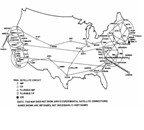
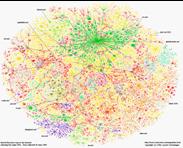
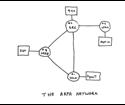
complex. Here is a picture of the ARPANET in 1970. Here it is in 1980. Twenty years later, it is too complex to
draw, let alone understand, model, or predict its behavior. The Internet is computer science’s gift to
society, but ironically we cannot even describe it.
|
|
|
|
We interpret networks at
multiple layers of abstraction. Below,
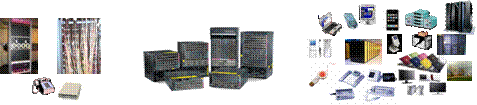
we are concerned with new technologies: in the beginning we communicated via
phone lines, modems, and cables underground and now we have a proliferation
of communication media and a proliferation of devices, sensors, and
actuators.
|
|
|
|
Above, we are concerned with
new kinds of social uses of our computers and networks: from the days when
people shared a terminal, to today where we have a multitude of applications,
from the good to the bad. Examples of the good are on-line banking, social
networks, and open courseware that already enables tens of millions of
people, including tens of thousands of high school students, to learn from
famous professors. Examples of the bad
are spam, worms and viruses, and distributed denial of service.
|
|
|
|
I’ve shown pictures of the
past and the present. What about the
future? I believe that if we
understand the complexity of our networks better then we can evolve them in
ways that can unleash unimaginable creativity and innovation—from new
technologies, to new applications, to new users—and hopefully at the same
time improve the overall security of our networked systems.
|
|
|